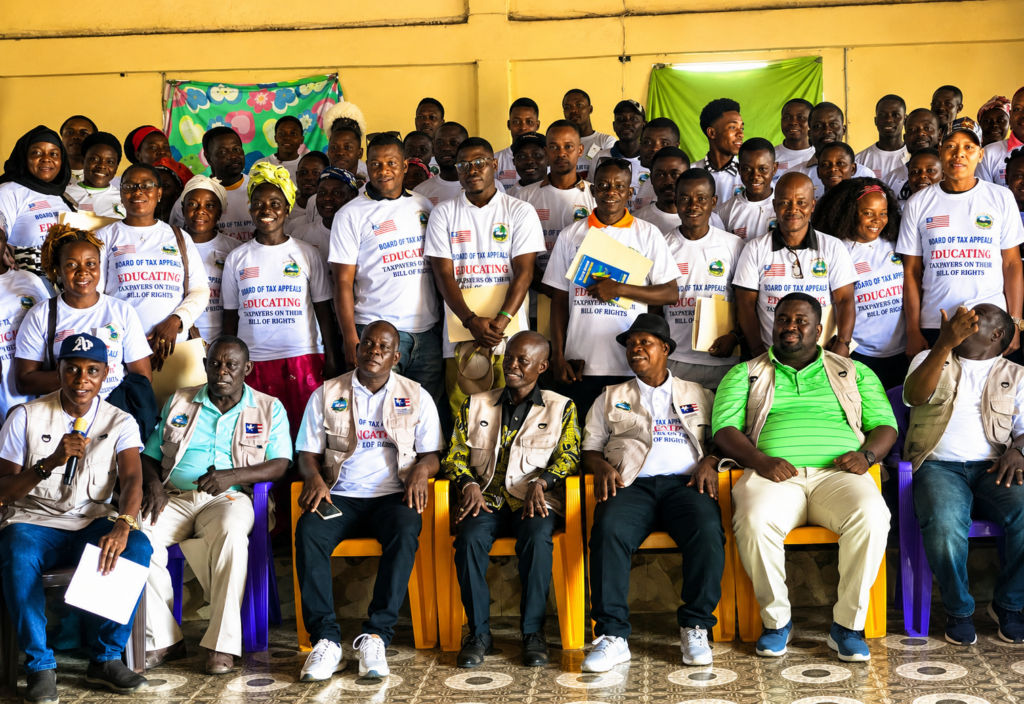
Gbarnga, Bong County – January 17, 2026 — The Board of Tax Appeals (BoTA) has successfully concluded a one-day Taxpayer Education Workshop in Gbarnga City, Bong County, aimed at strengthening public understanding of Liberia’s tax system and taxpayers’ legal rights.
The workshop, held under the theme “Know Your Bill of Rights and the Importance of the Tax Appeals Process” brought together business owners, tax practitioners, and representatives of key institutions within Liberia’s tax and commerce sectors. The event took place at the Serengeti Conference Hall in Gbarnga City.
The initiative was designed to educate taxpayers on their Bill of Rights, the Tax Appeals Process, the mandate of the Board of Tax Appeals, and relevant tax laws of Liberia, ensuring that taxpayers are better informed about their rights and responsibilities under the national tax system.
Key Presentations
BoTA Commissioner for Legal Affairs, Cllr. David M. Kolleh Jr., presented on the mandate of the Board, providing participants with a deeper understanding of BoTA’s role in resolving tax disputes between taxpayers and the Liberia Revenue Authority (LRA).
For his part, BoTA Executive Director, Cllr. Benjamin B. Stewart Jr., delivered a presentation on the Taxpayers’ Bill of Rights, highlighting the fundamental protections available to taxpayers under Liberian tax laws. He encouraged participants to take advantage of legal tax provisions to ensure compliance while avoiding unnecessary losses in business operations.
Cllr. Stewart also spoke on the role of the Liberia Revenue Authority (LRA) in tax administration and collection, calling on taxpayers to continue paying lawful taxes as a vital contribution to Liberia’s national development.
Meanwhile, BoTA Deputy Executive Director for Legal Affairs, Atty. Tonia A. Gibson, delivered a practical demonstration through a live drama presentation, illustrating how the Tax Appeals Process functions at BoTA. The interactive session provided participants with a clear understanding of the standard procedures for filing appeals following determinations made by the LRA.
Participants’ Recommendations
Following the presentations, participants engaged in a question-and-answer session and presented key recommendations, including:
1.) Regulation of “Tax Aid” Personnel
Participants called for the reduction and proper regulation of individuals assisting LRA tax agents in Bong County, citing concerns over impersonation, aggressive conduct toward taxpayers, and reputational risks to the LRA.
2.) Wholesale and Retail Trade Practices
Concerns were raised about foreign-owned businesses engaging in both wholesale and retail trade, which participants said negatively affects local businesses and their ability to generate income to meet tax obligations. They called on BoTA to champion these concerns with relevant government institutions for redress.
3.) Collaboration with LBR and Ministry of Commerce
Participants recommended stronger collaboration between BoTA, the Liberia Business Registry (LBR), and the Ministry of Commerce and Industry during taxpayer education programs to strengthen business registration awareness and compliance.
4.) Advance Notice of Tax Inspections
Participants urged the LRA to provide prior notice before conducting inspections for tax clearance and related documentation to allow businesses adequate time to prepare and comply.
BoTA’s Response
The Board of Tax Appeals acknowledged the concerns and recommendations raised and assured participants that these issues will be presented to relevant institutions for consideration, as has been done following previous workshops in the southeastern region, Grand Bassa, and Nimba counties.
Nationwide Awareness Campaign
This workshop forms part of BoTA’s ongoing nationwide taxpayer awareness campaign, which has already been conducted in Maryland, River Gee, Grand Gedeh, Grand Bassa, Nimba, and Montserrado Counties between 2024 and 2026. The Board is preparing to extend similar initiatives to the western region of Liberia in the coming months.
BoTA remains committed to empowering taxpayers through education, fairness, and due process in Liberia’s tax system.
Leave a Reply